Monday, March 2, 2015

My go-to place for info

I have sought its assistance when writing every book.

When preparing The Mine and The Mirror, I asked it for information on the peacetime military draft in 1941 and 1964.

When researching The Fire, I inquired about the price of pearls in 1907, public reaction to Halley's comet in 1910, the workings of the National Forest Service, and the incubation period for polio.

When planning September Sky, I requested turn-of-the-last-century fire insurance maps of Galveston, write-ups on Pullman porters, and a primer on U.S. copyright law.


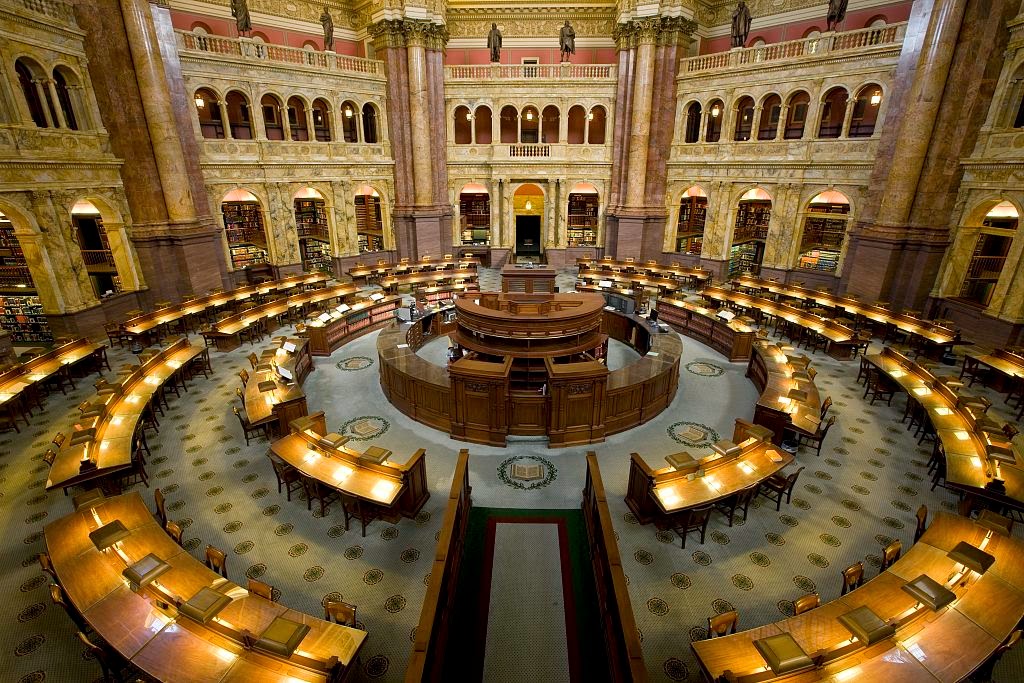
The Library of Congress delivered every time.

It delivered again last week. Mere days after I requested news articles on the cherry blossom festival in Washington, D.C, in 1939, the LOC sent two Washington Post stories directly to my in-box.

I expect that these articles and others will prove useful when I write the second novel in the American Journey series later this year.

I point all this out not only to praise the LOC — a national treasure if there was one — but also to draw attention to libraries in general.

In today’s digital world, where information can be obtained and shared with lightning speed, many believe that libraries are not necessary. They believe they are obsolete and needlessly expensive. As a result, many of these institutions for forced to scrap for funds and continually justify their existence.

As a former reference librarian who knows the difference between the first answer from a search engine and the best answer from a book, I hope this kind of thinking passes. A strong society depends on information that is not only timely but also accurate, relevant, and accessible. It needs information that is free.

As an author of historical fiction, I can’t count on life experience to fill every void or answer every question in a novel. I must depend on others to provide facts, materials, and guidance.

Libraries, including that treasure in the nation’s capital, continue to do just that. For that reason alone, I will always have their back.

Wednesday, February 18, 2015

Review: Winter of the World

To say that Ken Follett is one of my favorite authors is a serious understatement. I have read eighteen of his novels, including four of his massive historical tomes, and loved them all.

I still consider The Pillars of the Earth, Follett’s epic about twelfth-century England, to be the best book I have ever read. So I didn’t need much incentive to return to his works when I finally had the chance to do so.

This time the treat of choice was Winter of the World, the second book of the Century Trilogy. The series includes Fall of Giants, which I read following its release in 2010, and Edge of Eternity, which I will devour at the earliest opportunity.

Winter follows the lives of five interrelated families — English, Welsh, Russian, German, and American — from the rise of the Third Reich in 1933 through the beginnings of the Cold War in 1949. Though there are far too many characters to name in a single review, there were not too many to leave an impression.

Follett tells the story of the time from several perspectives: young and old, male and female, rich and poor, civilian and military, and good and evil. He gives readers a front-row seat of the Spanish Civil War, Pearl Harbor, Midway, D-Day, the development of atomic weapons, and the political drama in Britain, Germany, and the U.S. Few stones from the era are left unturned.

Though I gravitated toward the riveting descriptions of major historical events, I also loved the many personal narratives. I became quickly invested in Lloyd Williams, the principled and daring English soldier; Daisy Peshkov, the plucky American socialite; and Carla von Ulrich, the young German nurse who gave new meaning to courage and sacrifice.

In Winter of the World, Follett doesn’t make readers choose between big-picture history and small. He gives us both — and a whole lot more. I look forward to completing the trilogy and returning to the author's earlier works. It’s time to catch up. Rating: 5/5.

Sunday, February 1, 2015

A plotter, not a pantser

E.L. Doctorow once said, “Writing is like driving at night in the fog. You can only see as far as your headlights, but you can make the whole trip that way.”

I must say that, for the most part, I can’t relate. When it comes to producing novels, I'm a "plotter" and not a "pantser." A pantser is someone who writes by the seat of his (or her) pants -- a person who can reach a destination without looking too far ahead.

Writing for me is not a spontaneous process that begins by opening a blank page on my laptop. It is a process that is so clear and ordered, it’s like driving all day in sunshine on a flat, straight, traffic-free highway with my GPS navigator activated.

My outline takes the form of detailed chapter summaries that can run from twenty words to two hundred. If there’s something I want to mention in Chapter 26, I’ll leave myself a reminder. Often I will add entire quotes or passages to a summary.

By the time I’m ready to start Chapter 1, I know not only which roads I will take to get to my destination but also which ones I’ll avoid. Virtually every twist, turn, and potential obstacle will be identified well in advance.

I say virtually because, like most authors, I like to leave some room to depart from the script and do something entirely different.

When I wrote The Mine, my first novel, I added a Japanese-American character about a third of the way in. The character, a college senior named Katie, became one of the most instrumental figures in the book. In three other novels, I added two lengthy chapters after the first draft was “finished.”

I’ve found that this approach works well. By outlining a novel in advance, I reduce the chances of writing myself into a corner. By leaving myself wiggle room, I leave open the possibility of heading down a better road.

In the twentieth of his twenty-two lessons on writing, Stephen King advises writers to take a break from their finished draft. He suggests six weeks, in fact, so that they can return to their manuscript with fresh eyes and see the proverbial forest among the trees.

I think this is sound advice. Good writing is a process that requires not only discipline and perseverance but also patience and perspective. What may seem a great idea in the planning stages may seem downright dumb in the end.

As I jump into the second novel of my second series, I plan to drive during the day with a map handy. But I’m going to keep an eye on the signs. Last-minute detours can do more than make a trip more interesting. They can make it better.

Sunday, January 25, 2015

Review: The English Girl

A few years ago, before I began writing novels of my own, I used to jump on every thriller that hit the bestsellers list. Vince Flynn became a fast favorite, as did James Patterson, Joel Rosenberg, Lincoln Child, and Tess Gerritsen. But only Flynn captured my attention like Daniel Silva.

This month I returned to Silva by reading The English Girl and found it every bit as riveting as The Messenger, Moscow Rules, and The Rembrandt Affair. Centered around Israeli intelligence officer Gabriel Allon, the novel, Silva’s sixteenth, is perhaps his best.

When the English girl in question, the mistress of the prime minister, goes missing in Corsica, Allon is called in by his British counterpart to assist with her return. Before long, he finds himself racing around France and Britain to beat a seven-day deadline imposed by the victim’s abductors.

As in his earlier books, Silva weaves a tale that is both intricate and straightforward. Old friends and adversaries meet in familiar places to resolve a mystery that kept me on edge almost to the very end.

Silva also takes an extra step in humanizing his sometimes colorless and mechanical protagonist. We see Allon not only as a master spy but also as a friend and a family man.

Though sometimes drawn-out, particularly in the middle, the book held my interest throughout. I am glad to see that Silva has not lost his touch and look forward to reading his latest work. Rating: 4/5.

Wednesday, January 14, 2015

Three Things on HEA

Of all the bloggers I've worked with in the past three years, few have been more helpful than Joyce Lamb. The curator of USA TODAY’s Happy Ever After blog published a review by Kathy Altman just weeks after The Mine’s release in February 2012, a guest post of mine in 2013, and four promotional blurbs about The Fire and The Mirror in late 2013 and early 2014.

For September Sky, Lamb, an award-winning author of romantic suspense novels, invited me to participate in the blog’s "Three Things" feature. My answers to three questions about what inspired my latest release, the first book in the American Journey series, can be found here in USA TODAY’s online edition. Authors Cathleen Armstrong and Rhenna Morgan are also featured.

Thursday, January 1, 2015

A news series for a new year

Author Sally Koslow once compared writing a book to "giving birth to an elephant."

Even as a father who has seen the inside of a delivery room, I can’t fully relate. There is only so much understanding ANY male can gain from the process of childbirth. (Let me repeat that three times.)

As the author of six full-length novels, however, I can at least appreciate Koslow’s sentiment. And as the author of a 125,000-word historical epic, I can say I get the "elephant" thing too.

Writing can be . . . well . . . laborious. But in this case, the labor was worth it.

Say hello to September Sky. Nine months in the making, it is my newest, largest, and most spirited baby, a multi-genre work that launches the American Journey series.

Like the novels of the Northwest Passage series, September Sky follows a contemporary time traveler to the world of a twentieth-century relative. Like the other books, it features history, romance, humor, adventure, and multiple points of view.

Unlike the other books, it does not feature a protagonist named Smith, Vandenberg, Preston, or Johnson. It does not take place in the Pacific Northwest.

September Sky is a literary child that remembers its roots but heads in new directions.

It is the story of a remorseful, unemployed San Francisco reporter who tries to rebuild a relationship with his estranged, college-dropout son by taking him on a cruise to Mexico.

Once on board, however, Chuck and Justin Townsend do more than mend fences. They meet a lecturer who has discovered the secret of time travel. Within days, the Townsends find themselves on a 1900 train to Texas, intent on saving a distant relative from being hanged for a crime he did not commit.

Set against the backdrop of one of the deadliest hurricanes in history, September Sky is the first of a planned five-book series. I hope readers will enjoy reading it as much as I enjoyed writing it.

The novel is available as an ebook on Amazon.com.

Wednesday, December 24, 2014

A timeless Christmas story

This time of year there is no shortage of stories about the magic of Christmas. No matter where you look — in the news or in everyday life — there are accounts of people doing good deeds for others, setting aside differences, and otherwise getting into the spirit of the season.

Some of these stories are current, while others are as old as the holiday itself. Many leave lasting impressions. One of my favorites is the Christmas Truce of 1914.

One hundred years ago today, the first of thousands of British and German troops in Ypres, Belgium, left the safety of their trenches to celebrate both Christmas and their common humanity.

For two days, the World War I belligerents defied orders from their superiors by singing carols, exchanging gifts, holding joint religious services, and — according to legend — playing soccer.

Though the tale has been told many times in song, on film, in literature, and, most recently, in a slick advertisement by a British supermarket chain, it never seems to grow old. Then again, few stories better represent the "peace on earth, goodwill toward men" sentiment that is at the heart of the season.

Here’s to the spirit that led even bitter enemies to become friends. Merry Christmas and Happy New Year!

Monday, November 10, 2014

Beta readers and covers

The errors are usually minor: an anachronistic figure of speech, an unnecessary adjective, a missing preposition, or an incorrect date. On occasion, the mistake is (gasp!) an adverb — the asphalt of Stephen King's oft-cited road to hell.

Whatever the boo boo, I usually want to know about it. Which is why each time I finish the manuscript of a novel, I enlist the help of several volunteers to tear it apart. Each finds things others miss. All contribute something to the finished product.

For September Sky, the first novel of the American Journey series, I sought the help of ten beta readers. The group includes friends, relatives, former coworkers, subject specialists, and people who simply love the written word.

Thanks to the efforts of about half of these insightful individuals, solid early drafts have become even better later drafts. The others will take their turns between now and mid-December, when editor Aaron Yost applies the final touches. Aaron, a former newspaper colleague, has edited each of my previous novels.

September Sky also has a new cover. Laura Wright LaRoche, who produced the eye-catching cover of The Mirror, came up with a cover that I think captures the beauty and innocence of Galveston, Texas, the day before it was destroyed by a hurricane in 1900.

My sixth novel is tentatively scheduled for an early January launch.

Friday, October 24, 2014

Selling books in a global village

Of all the things I appreciate about being an author in the digital age, nothing beats being able to reach a global audience. I have never been to Europe, India, Southeast Asia, Australia, or South Africa, but because of Amazon.com, I’ve been able to sell books in all of those places.

There is something liberating about that. In the past, authors without the backing of a major publisher were rarely able to distribute their works beyond their local market. The costs of shipping a physical book even to other parts of the country were prohibitive.

The Internet has changed that. Like thousands of other authors, I can now send an entire novel — in digital format — to someone on the other side of the planet in seconds. The cost to me — and to the online retailer — is measured in pennies.

Challenges remain, of course. It’s one thing to be able to deliver books instantly. It’s another to actually sell them overseas — even in markets where English is the dominant language.

When you write about Americans doing American-like things in the United States, you expect to sell at least a few books to people who know and perhaps appreciate the nation’s customs, culture, and history. You don’t expect to sell books to people from much different backgrounds. At least I didn’t.

One reason I’ve had at least marginal success in other countries is because of bloggers like Heena Rathore Pardeshi of India, who reviewed The Mine this week. By focusing on things their readers have in common with my characters, they’ve opened doors and reminded me that the world is, indeed, a pretty small place.

For that, I will always be grateful.

Technology has made it possible not only to publish but publish everywhere. If you've ever wanted to write a book, there has never been a better time to do so.

Wednesday, October 8, 2014

On-site inspection

To be sure, Galveston, Texas, is not the place it was 114 years ago. Like every other mid-sized city in America, it has modern buildings, streets, and services. Like other tourist destinations, it has plenty of twenty-first-century glitz.

When I visited Galveston this week, however, I didn’t find it difficult to imagine what the city was like on September 8, 1900, when it was virtually destroyed by one of the worst hurricanes in history. Signs of the city’s past were as visible as those of its present.

Scores of well-preserved Victorian homes can be found in most of the seven districts listed on the National Register of Historic Places. So can public buildings that date to the 1800s, businesses that have operated for decades, and the ruins of a house once occupied by pirate and privateer Jean Lafitte.

I visited the city, the setting for my upcoming novel, September Sky, because I wanted to experience the place I was writing about. And I’m glad I did.

It’s one thing to read about stifling heat and humidity. It’s another to feel it. Just as it’s another to stand in the shadow of the Texas Heroes Monument, walk down The Strand, wade in the churning Gulf of Mexico, and hear the horns of seagoing vessels in Galveston Bay.

I specifically visited some sites — such as the City Cemetery and the Garten Verein, an octagonal dancing pavilion built in 1880 — because I knew they had changed little in the past century and because they were settings for important chapters in the novel.

I visited others — like the Rosenberg Library, the Tremont House, and Old Red, the University of Texas’ first medical school — because I wanted to see if they were as impressive in person as they were in literature. (They are.)

Throughout my two days in the island community, I took notes, snapped photos, talked to people who know the town, and made the kinds of observations one can only make when they see a place up close. I intend to use this information to make what I think is already a good book even better.

September Sky, the first novel of the new American Journey series, is tentatively scheduled for a December launch.

Top photo: Garten Verein. Bottom: Old Red (Ashbel Smith Building).

Monday, September 8, 2014

Dealing in disaster

There is nothing like a disaster as a backdrop for a book or a film. Disasters are, by definition, dramatic. They bring out the heroes, cowards, lovers, and fighters in delightfully equal numbers. They make the ordinary extraordinary and bring a story into focus.

Take the movie Titanic. Without the iceberg and the sinking ship, it is Downton Abbey. With them, it is Downton Abbey on steroids. Every act in the story becomes significant because of the high stakes and the price of failure. In the 1970s, one man, Irwin Allen, became a household name making movies about things that sank, burned, or crashed. He knew what creators have known for centuries: disasters grab our attention and hold it.

For this reason, I used disasters as backdrops for two Northwest Passage books. The Journey ends with the 1980 eruption of Mount St. Helens, The Fire with the Big Burn of 1910. In two other novels, characters are motivated by the specter of disasters to come.

In September Sky, the first novel of the new American Journey series, my time travelers, a San Francisco reporter and his college-age son, confront a hurricane in Galveston, Texas. The storm, which struck 114 years ago today, killed 6,000 people and nearly wiped a modern city off the map. (See photo.)

Like the Northwest Passage books, September Sky will focus on characters with knowledge of a coming disaster and the choices they make in the face of that disaster. Like the other novels, it will feature history, romance, humor, and multiple points of view.

I hope to have it out by Christmas.

Saturday, August 2, 2014

The road to Dixie

I admit the cat’s meows took some of the bloom off the rose. So did the endless construction, the commuter traffic in several cities, and drivers who permanently occupied the passing lane.

On the whole, however, I couldn’t complain. My 3,500-mile, roundabout trip across the United States last month was everything I had hoped it would be and then some.

You see a lot when you see America by car. You learn a lot too. You learn even more when you travel with a talkative daughter, a stubborn dog, and a high-maintenance feline in a Nissan Frontier pickup filled to the gills with stuff. I know I did.

I learned, for example, that I like Old Crow Medicine Show. I love it, in fact. I didn’t know it when my daughter Heidi, 22, started playing bluegrass and folk at the beginning of the trip, but I do now.

I also found I like Wyoming’s 80-mph speed limit, Tennessee’s gas prices, sunsets in central Missouri, and the pet policies at Motel 6, where they not only leave the light on for you but also let your dog and cat stay in your room for free.

There is more to travel, of course, than getting from Point A to Point B quickly and cheaply. There are the things you do along the way, the things that become memories and fodder for photographs.

I did a lot of those, too, from dipping my toes in the Pacific near Ocean Shores, Washington, to riding the bike trails in Wallace, Idaho, to taking a picture with Superman in Metropolis, Illinois. Heidi and I even posed with an ear of corn. When you are stuck in Mitchell, South Dakota, you do those things.

The only things I truly didn’t like — besides Nashville’s traffic and the cat's occasional protests — were the bugs that embraced my windshield. In South Dakota, bugs are big — bigger even than the billboards touting Wall Drug — and more numerous than the Harley riders headed to Sturgis.

What I’ll remember most, however, are the personal notes. On my latest and longest road trip across the U.S., I had the chance to visit with Montana friends one last time, reconnect with a daughter redefining her life, and think a lot about my future as a newly unemployed writer of fiction.

That future began Friday, the day before my 28th wedding anniversary, when I reached Alabama and reunited with my wife after ten weeks apart. She was eager to show me the unfinished house that will soon be our home and the fourth-grade classroom that will soon be her workplace.

I gave them both a look but saved the rest of my new community for another day. After seeing eleven states in eleven days, I decided to keep the driving to a minimum.

Friday, July 4, 2014

Saying goodbye to a city

I admit that my first impression of Helena, Montana, was not a good one. I was approaching the city on Interstate 15, bound for a job interview, when snowflakes the size of silver dollars began peppering the windshield of my Nissan Sentra.

Coming from Boise, Idaho, I knew all about January weather. Trouble was, it wasn't January. It was May. May 2000. While most of the country was preparing for a long, hot summer, Montana's capital was just emerging from winter. I almost turned around.

I still don't like winter in spring and summer. There's something very wrong about watching a baseball game in a heavy coat and scraping ice from the inside of a window on Labor Day. But even the long winters couldn't dampen my enthusiasm for a town I quickly embraced.

When I brought my family to Helena, I didn't plan to stay for more than two years. I preferred the warmer and more populous parts of the Pacific Northwest and wanted to return to those parts as soon as I could.

What I didn't count on was falling in love with things like confectioneries, quirky architecture, walking malls, and nature trails. I didn't think outdoor concerts, ski areas, theater schools, and trout streams could influence career decisions either, but they did. I stayed in Helena because it was a great place to live.

It was also a great place to write about. So when I considered settings for The Mine, I naturally included a city I knew well. I decided to introduce the novel's protagonist, a Seattle man, in my hometown -- not his. I wanted Joel Smith to explore Helena's historic downtown, hear a few "hons" and "howdies," and drive like a bat down Highway 12, just as I had on countless occasions.

I wanted Grace Vandenberg to see Helena too. So when I wrote The Show, I added the city to the heroine's itinerary.

I set more than twenty Northwest Passage chapters in Helena and vicinity because I wanted to showcase places that had become central to my life. I wanted readers to see what I saw every day.

There will be no more Montana chapters or books, at least in the near future. My focus will soon shift from the Rockies to Dixie, where I will spend at least the next few years. My next novel, September Sky, will be set in Galveston, Texas, a city built on nineteenth-century cotton and not nineteenth-century gold.

That doesn't mean I'll forget this community between the Missouri and the mountains. One doesn't forget cities with fire towers, art houses in jailhouses, and streets named Last Chance Gulch. It's just that my attention will be directed elsewhere.

Which is just as well. By the time I leave Helena later this month, the "Symphony Under the Stars" will have come and gone -- as will the best days to camp and fish. Then a few leaves will turn and the comforting summer breezes will take a chilly edge.

Winter will be just around the corner.

Thursday, June 26, 2014

Saying goodbye to a home

If I remember nothing else, I’ll remember the rooms. I found it impossible this week to walk through the quiet, empty rooms of my Montana home of fourteen years and not think of the times when they were not so quiet and empty.

When I stepped into the small bedroom upstairs, the one facing the lush garden in back, I couldn’t help but think of my three children. Each had called the room their own at one time or another. Like the brightly painted room in the basement, it was their space, their retreat, the place they could collect their thoughts and make their mark — as they (literally) so often did.

No less memorable was the table-less dining room with the low-hanging chandelier. Though it had been weeks since it had been filled with food and family, I had no difficulty remembering the holiday dinners, the birthday parties, the card games, and the family reunion in 2008.

Then there was the heart of the house, the open living room with the picture-window view of the northern Rockies. It didn’t seem right without the sofa on one side, the flat-screen TV on another, and a lavishly decorated Christmas tree in the corner. It didn’t seem right without people.

This was a place where memories were made — a venue for countless gatherings, discussions, and photographs. To see it as three walls and a floor was to see it as a carpenter might see it: barren, utilitarian, lifeless.

I knew this would happen. When people pack their belongings and empty their houses, they take more than couches, lamps, and wall hangings. They take memories. They take the very things that defined their lives in a certain time and place.

It’s fitting that this transition occurred this year. My youngest finished high school this month and will soon head off to college. My wife is in the South, training with Teach for America and getting ready to find her place on the front lines of education.

I’ll join her in a few weeks and blaze some trails of my own as a novelist with a lot more time to write, market, and do the things I like to do. Whether I’ll do so in a house or a community as inspiring as the one I’m leaving remains to be seen. But I’m optimistic.

A home, after all, is what we make of it. I plan to make the most of my next one.

Next: Saying goodbye to a city.

Thursday, June 19, 2014

My Writing Process blog tour

Since taking up novel writing two years ago, I’ve been asked many times to weigh in on the writing process. More often than not, those doing the asking are reviewers seeking insights into the making of a particular book. On occasion, however, I hear from other authors and bloggers who simply want to me to participate in an an activity for authors and bloggers.

Casee Marie Clow, book reviewer and lifestyle blogger, offered me such an opportunity the other day when she asked me to take part in the My Writing Process blog tour. Writers are asked to acknowledge the person who invited them, nominate three others to participate in the tour, and answer four questions.

Acknowledging Casee is a pleasure. She is one of the most eloquent and gracious bloggers in the business — one who took the time to read and review each of the Northwest Passage novels in Literary Inklings. She also owns and edits The Girl Who Stole the Eiffel Tower blog.

I am also happy to recommend three bloggers and writers who have blazed their own trails. They include Sandra C. Lopez, R.G. Dole, and Aaron Yost.

Sandra is the author of Esperanza: A Latina Story, which I reviewed last year, and its sequel, Beyond the Gardens. A graduate of California State University, Fullerton, Sandra was named as one of 2011’s “Top Ten New Latino Authors to Watch" by Latino Stories.

I got to know R.G. this year when I asked her to review The Mine. She is the author of Immortal Longings, a novel about vampires and werewolves, and blogs at A Drip of Truth and a Drop of Lies.

Aaron is a longtime friend, former newspaper colleague, and award-winning sportswriter who edited all five NWP books. He is also an accomplished photographer who is currently finalizing his first novel. He manages the Triple Play with Aaron Yost blog.

Sandra, R.G., and Aaron will participate in the tour on June 26.

Now … on to the questions:

1) What are you working on?

I am currently writing the first novel of the American Journey series. In September Sky, an unemployed reporter and his college-age son will travel from 2016 Los Angeles to 1900 Galveston — the time and place of one of the deadliest hurricanes in history. Like the novels of the Northwest Passage series, September Sky will span several genres and offer multiple points of view. I hope to have it out by the end of the year.

2) How does your work differ from others of its genre?

That’s a tough question, given that my books don’t fit neatly in any one category. They do differ markedly, however, from most other time-travel novels in that they feature more history, fantasy, and romance than science fiction. They also bend the “rules” of time travel and often move in unexpected directions. They are not, for the most part, formula fiction. Each novel has its own signature.

3) Why do you write what you do?

I write what I do because I enjoy it. It’s that simple. I enjoy telling stories about ordinary people who find themselves in extraordinary circumstances because they enter the wrong mine or restroom or funhouse and involuntarily travel through time. I enjoy writing novels that push positive, timeless themes and prompt readers to ask the big questions — questions they may rarely ask of themselves.

4) How does your writing process work?

I always start with an extensive outline, complete with detailed chapter summaries and character sketches. I don’t know any other way to write something as complex as a modern novel. That said, I allow myself wiggle room to depart from the script. I frequently change the plot and characters as I go. I think this approach makes for a better book in the end.

Tuesday, June 3, 2014

The Journey at the 2014 IRDAs


For the second consecutive year, I fell short of ultimate success in the Indie Reader Discovery Awards competition. IRDA judges selected The Hour of Parade by Alan Bray as the winner in the Literary Fiction sub-category. Bray was one of fifteen genre-fiction winners announced May 31 at the Book Expo America in New York. The Journey, my entry in Literary Fiction, earned the coveted “Indie Reader Approved” designation with a review rating of four stars. In doing so, it gained a distinction that eluded The Mine, a Popular Fiction entry, in last year's contest. Indie Reader's review of The Journey will run on June 23.

Thursday, May 1, 2014

Review: The Awakening

If there is one thing I like about reading classics, it’s that they don’t go away. They remain in libraries, stores, and the minds of readers for decades precisely because they they embrace powerful themes that never go out of style.

I can’t remember half the books I read last year but I can remember most of the classics I read in high school and college, particularly novels like Tolstoy’s Anna Karenina and short stories like Hemingway’s “Big Two-Hearted River,” Flannery O'Connor's "A Good Man is Hard to Find," and Shirley Jackson’s “The Lottery.”

Last month I revisited a novel I hadn’t read since the early 1980s, The Awakening by Kate Chopin. As one who is planning a novel based in the South in 1900, I wanted to reacquaint myself with the language, customs, and issues of that particular place and time.

On that score, Chopin’s best-known work did not disappoint. It provided a vivid, memorable portrait of turn-of-the-century Creole Louisiana and reminded me how much times have changed even for the privileged and educated.

The characters are less compelling. Protagonist Edna Pontellier — an unfulfilled, self-absorbed free spirit — does not command much sympathy. Nor do her distant, clueless husband Léonce or a coterie of friends, lovers, and acquaintances. All seem incapable of looking beyond their own selfish, narrow interests.

Even so, I found this novel well worth a second look. Chopin challenges the rigid, often stifling social mores of the time and gives readers a thought-provoking work that will no doubt be read and discussed in yet another hundred years. Rating: 3/5.

Tuesday, April 15, 2014

A day to remember

Whether reading, writing, or viewing movies and TV programs, I never tire of exploring the past. I majored in history in college not because I wanted to teach history but rather because I wanted to learn more about it.

Though the past is past, it is never settled. It is subject to constant scrutiny, debate, and revision. And that, in my opinion, is what makes it interesting.

I thought about that this morning when I read an article about one of the most iconic historical events of all time: the sinking of the RMS Titanic. The ship that couldn't sink did just that 102 years ago today, spawning countless books, movies, and discussions that continue to this day.

There are seemingly fewer questions about how and why the Titanic went down than before its wreckage was discovered in 1985, but some questions remain. For example, in their work What Really Sank the Titanic: New Forensic Discoveries, authors Jennifer Hooper McCarty and Tim Foecke argue that weak rivets, not weak steel, doomed the luxury liner.

Even the forensics debates, of course, can't measure up to the human drama. The sinking remains a compelling story precisely because it offers so many lessons -- about public attitudes, class, culture, and the promise and limits of technology.

Some of the best takes on the tragedy can still be found in literature. I strongly recommend Walter Lord's 1955 classic, A Night to Remember, and newer books like Andrew Wilson's Shadow of the Titanic: The Extraordinary Stories of Those Who Survived, which was published last year.

As one who believes that history is often best appreciated in museums, I also recommend Titanic: The Artifact Exhibition. I've seen the display twice and believe it is worth every cent. It is currently making the rounds in five U.S. cities.

As glimpses of the past go, it doesn't get better.

Thursday, March 20, 2014

Explaining the NW Passage

The questions almost always start with "why." "Why time travel?" "Why the Northwest?" "Why male protagonists in some books and females in others?" Or, as my 19-year-old daughter likes to ask, "Why do you have to marry off all of your characters before they're twenty?!"

(She exaggerates but only slightly.)

I've tried to answer these questions and others in nearly fifty interviews and personal e-mails since February 2012 -- when I published The Mine -- but still the questions come. Some readers ask things I've been asked many times. Others request fresh takes on old matters. Almost all simply want to better understand books they've read and, in most cases, enjoyed.

So I decided this week that before I officially put the Northwest Passage series to bed, I should make an attempt to explain why I did what I did in writing five books that have been my passion for more than two years. In no particular order are the subjects representing frequent questions.

Time travel: As I've noted in many interviews, I outlined The Mine minutes after watching The Time Traveler's Wife in 2011. Though I enjoyed both the book and the movie, I was more interested in twentieth-century time travel than that particular story. I wanted to see how a modern time traveler fared when suddenly thrust in the world of his or her not-so-distant ancestors. In three years, that interest has not waned.

Time portals: I decided to treat time travel as fantasy, rather than science fiction, because fantasy offered more opportunities to be creative. When the only limits are the limits you place on yourself, you can have a lot of fun.

Time streams: I knew from the outset I could not write the NWP series and adhere to the theory that time is a single, unchangeable stream. When you meet your parents or grandparents or great-grandparents in their time, history changes -- and when history changes, so do you. Using multiple timelines became a must.

Settings: Writing about the Pacific Northwest was never a question. When you live and work in places like Washington, Oregon, Idaho, and Montana, writing about those places is easy and appealing. I should note, however, that the settings in the series were not strictly limited to the Northwest. Hawaii and Nevada made guest appearances.

Protagonists: Writers are advised to write what they know. But as novelist James Rollins once asked, "What's the fun in that?" Beginning with The Journey, I decided that the books in this series would not be told strictly from a male perspective. I would do what authors have always done when they wrote outside the realm of their experience. I would learn.

Relationships: My daughter is not far off. There are no fewer than eight engagements involving college-age characters, including three involving Grace Vandenberg Smith alone. My objective in the series was to show how young people in love reacted to circumstances and events that could change on a dime and often put their commitment to each other to a serious test.

Sequence: I wrote the NWP series out of order because, at the start, I did not plan to write a series at all. When I finally committed to writing five books, I decided that the best way to go was to alternate between two time-traveling families. Though I will probably not repeat this approach in the future, I like how this series turned out.

Common threads: Though the NWP books are, for the most part, distinctive works, they share many themes, venues, and even characters. Joel Smith and his mother Cindy appear and speak in all five books. Grace provides a point of view in three.

Frequent flyers: Kevin Johnson travels through time on eight occasions in The Fire. Grace Smith travels only three times but is the only character in the series to experience two distinct eras she was never meant to see.

Readers and bloggers occasionally ask me to cite my favorites in the series. I admit I don't have a favorite book, but I do have favorite characters (Ginny Smith, Sadie Hawkins), settings (Seaside, Wallace), and scenes (the drag race in The Journey, the wedding in The Show, the Beatles concert in The Mirror).

I also have a favorite ending, which many of my readers share. If I can ever again catch lightning in a bottle, like I apparently did in Chapter 70 of The Mine, I'll be sure to share it.

Readers now, of course, seem more interested in what's coming up. They want to know if the next series will be anything like the last. The short answer is yes. I have enjoyed writing novels that blend history, humor, romance, and serious themes and fully intend to write more. I hope to publish the first novel in the American Journey series by this fall.
Saturday, March 1, 2014

Number five goes live

There is something liberating about ending a series. When you bring a story to an end, you can focus solely on the task at hand and not what comes next. You have the freedom to take chances. You can write the story you want to write.

Today that story goes live. The Mirror is not just the fifth and final book in the Northwest Passage series. It's the novel I've wanted to tackle for more than a year -- a work that answers lingering questions, takes on new social issues, and recasts familiar characters in not-so-familiar roles.

It's the story of nineteen-year-old twin sisters who go from the comfortable, digital world of 2020 to the dawn of a turbulent decade that changed America forever. In Ginny and Katie Smith, readers will see 1964 as only a time traveler could see it.

The Mirror will not be my last time-travel work. Later this year, I will start a new series that encompasses many of the same themes. The Mirror will, however, be the curtain call for Joel Smith, Grace Vandenberg Smith, and their extended family.

I hope readers will like the last installment as much as they have liked the first four. The Mirror is available as a Kindle book on Amazon.com. Enjoy.

Monday, February 17, 2014

Review: Isaac's Storm

The thing I like most about researching possible settings for new novels is discovering works I might have otherwise ignored. Isaac's Storm, by Erik Larson, is one such work.

Subtitled "A Man, a Time, and the Deadliest Hurricane in History," Larson's book examines the Galveston hurricane of 1900 through the eyes of meteorologist Isaac Monroe Cline and other survivors of the storm. Eight thousand people perished in the disaster.

Larson does more, however, than trace a cyclone across the North Atlantic. He offers compelling look at Cline and his family, the fledgling Weather Bureau, and a prosperous turn-of-the-century community that saw itself as Houston's economic rival.

I found Larson's 1999 nonfiction work as informative, entertaining, and readable as The Big Burn by Timothy Egan, The Perfect Storm by Sebastian Junger, and even many novels. I strongly recommend it to fans of science and history. Rating: 5/5.

Thursday, February 13, 2014

The writing road at Milepost 2

I remember the day like it was yesterday. I clicked a button on a web page in the morning, waited impatiently for several hours, and finally noticed a subtle change shortly before taking my wife to dinner.

The Mine, the first novel in the Northwest Passage series, was no longer "in review." It was no longer an idea or a rough draft or a work in progress. It was live on Amazon.com. It was a published book and subject to the scrutiny that all books face.

I've learned a lot since February 13, 2012, when I joined the ranks of published authors. I've learned that covers matter, that marketing is a never-ending job, and that readers like happy endings and characters they can relate to. I've learned that producing a novel is time-consuming, humbling, and often frustrating but infinitely rewarding.

The rewards, for most of us, are not large royalty checks, awards, or publishing contracts but rather the thoughtful and often useful comments from readers. As one who cares about his craft, I've learned to pay attention not only to those who like my works but also those who don't.

Supporters are important, of course, because they keep indie authors going. They remind us that the hundreds of hours we spend on our "hobby" are ultimately worth it. Their opinions can make a day.

Constructive critics are no less relevant. When they point out flaws in our books, they help us improve. They ensure that we focus on what's important to the consumers of literature and not the creators.

In two years, I've also learned the value of perseverance and patience. When you try to find a niche in a world of millions of books, you learn that this business is a marathon and not a sprint. Even modest success takes time.

This year I plan to continue that marathon by releasing The Mirror and then starting a new time-travel series. With any luck, I will be able to apply what I've learned and keep a good thing going. It's been fun.